My hubby likes Peeps. I don't. I like marshmallows. I just don't like them coated in sugar. I could have bought him a pack of Peeps for a buck, but what's the fun in that? Instead, I found this recipe adapted from Martha Stewart online and made a homemade version. Fairly simple to do, not terribly time consuming but holy sticky. I'm pretty sure I'll find marshmallow around the house for a couple days because my 18-month-old took off with the beater while he was licking it.
Homemade Peeps
1 packet unflavored gelatin
1/4 cup cold water
1/3 cup cold water
1 cup sugar
Colored sugar
Cocoa powder (optional, for decoration)
Lightly coat a 9 x 9 pan with nonstick spray along with cookie cutters to cut out your peeps.
In a mixing bowl, sprinkle gelatin over 1/4 cup cold water. Let stand while you make the sugar mixture. To make the sugar mixture, combine 1/3 cup water and sugar over medium heat in a small saucepan. Stir until sugar is dissolved, and then stop stirring. Let cook until mixture reaches between 235°F and 240°F. Remove from heat, and carefully pour into the gelatin mixture while mixing on low speed. Pour in slowly, so the sugar mixture doesn't clump.
Beat on high speed 8 to 10 minutes until the mixture thickens, turns white and can hold soft peaks. Immediately spoon and smooth into prepared pan. Let sit a couple minutes, and then use either greased or moistened cookie cutters to cut out desired shapes. Roll cut shapes into colored sugar.
To make eyes or any other markings, mix cocoa powder with a couple drops of water. Use a toothpick to draw on designs. Makes a 9 x 9 pan of peeps.
Nonesuch exists. It's where you live your dreams. And my dreams involve bed and breakfasts, new recipes, bakeries, photography, cooking, cupcakes, canning, baking bread and writing. Bienvenidos.
March 29, 2013
March 22, 2013
Oreo Bundt Cake
Normally when I think of bundt cakes, I think of a simpler cake that doesn't require that much time or effort. The stack of dishes I accumulated during the process of making this cake from Baker's Royale contradicted my traditional thinking. Still, it was worth the effort. This is a delicious, rich, moist cake filled with this slightly gooey filling that makes you wish the entire cake were simply the filling even though the cake is wonderful in its own right.
Oreo Bundt Cake
Oreo Filling
1/3 cup Oreos, crushed (about 10 whole Oreos)
4 oz. cream cheese, softened
3 egg yolks
1 tsp. vanilla
1/3 cup sugar
2 Tbsp. all-purpose flour
Chocolate Cake
Preheat oven to 350°F. Cover bundt pan with bake spray, and lightly coat with cocoa powder.
To make the cake, place flour, baking soda and sal,t and whisk to comibine. Set aside.
Oreo Bundt Cake
Oreo Filling
1/3 cup Oreos, crushed (about 10 whole Oreos)
4 oz. cream cheese, softened
3 egg yolks
1 tsp. vanilla
1/3 cup sugar
2 Tbsp. all-purpose flour
Chocolate Cake
1 3/4 cups flour
1/2 tsp. baking soda
1/2 tsp. salt
3/4 cup natural cocoa powder
3/4 cup water, boiling
3 oz. quality bittersweet chocolate, chopped
3/4 cup buttermilk
3/4 cup butter, melted and cooled to warm
1 2/3 cups packed brown sugar
2 eggs
2 tsp. vanilla
1/2 tsp. baking soda
1/2 tsp. salt
3/4 cup natural cocoa powder
3/4 cup water, boiling
3 oz. quality bittersweet chocolate, chopped
3/4 cup buttermilk
3/4 cup butter, melted and cooled to warm
1 2/3 cups packed brown sugar
2 eggs
2 tsp. vanilla
Glaze
1 cup powdered sugar
2 Tbsp. milk
2 Oreos, chopped
2 Tbsp. milk
2 Oreos, chopped
Preheat oven to 350°F. Cover bundt pan with bake spray, and lightly coat with cocoa powder.
To make the filling, place Oreos in a food processor bowl, and pulse until crumbled. Place all ingredients in the food processor, and pulse until combined. Transfer
filling to a pastry bag, and place in refrigerator until ready for use.
To make the cake, place flour, baking soda and sal,t and whisk to comibine. Set aside.
In a heat proof bowl, add cocoa, and whisk in boiling water. Add in
chopped chocolate, and whisk until combined. Add in buttermilk, and whisk
until combined.
Place melted butter and and sugar in a bowl, and mix to combine. Add
in eggs, and beat until light and fluffy. Add in vanilla, and beat until
combined. Using a sturdy spatula or a wooden spoon, fold flour into wet
mixture in 3 batches, alternating with cocoa mixture.
Pour half of batter into pan, and then pipe Oreo filling on top. Pour
remaining batter on top of Oreo filling. Bake for about 50 to 65 minutes or until inserted cake tester comes out almost
clean. Remove from the oven, and set on a wire rack to cool for 20
minutes. Place a wire cooling rack on top of the cake, and carefully turn
over. Remove the pan, and let cool completely.
To make the glaze, add powdered sugar and milk into a bowl, and whisk to combine. Add
more milk as needed to thin glaze to preferred consistency. Pour icing over bundt cake, and sprinkle remaining Oreo crumbs on top.
Stormy Today, Sunshine Tomorrow Cupcakes
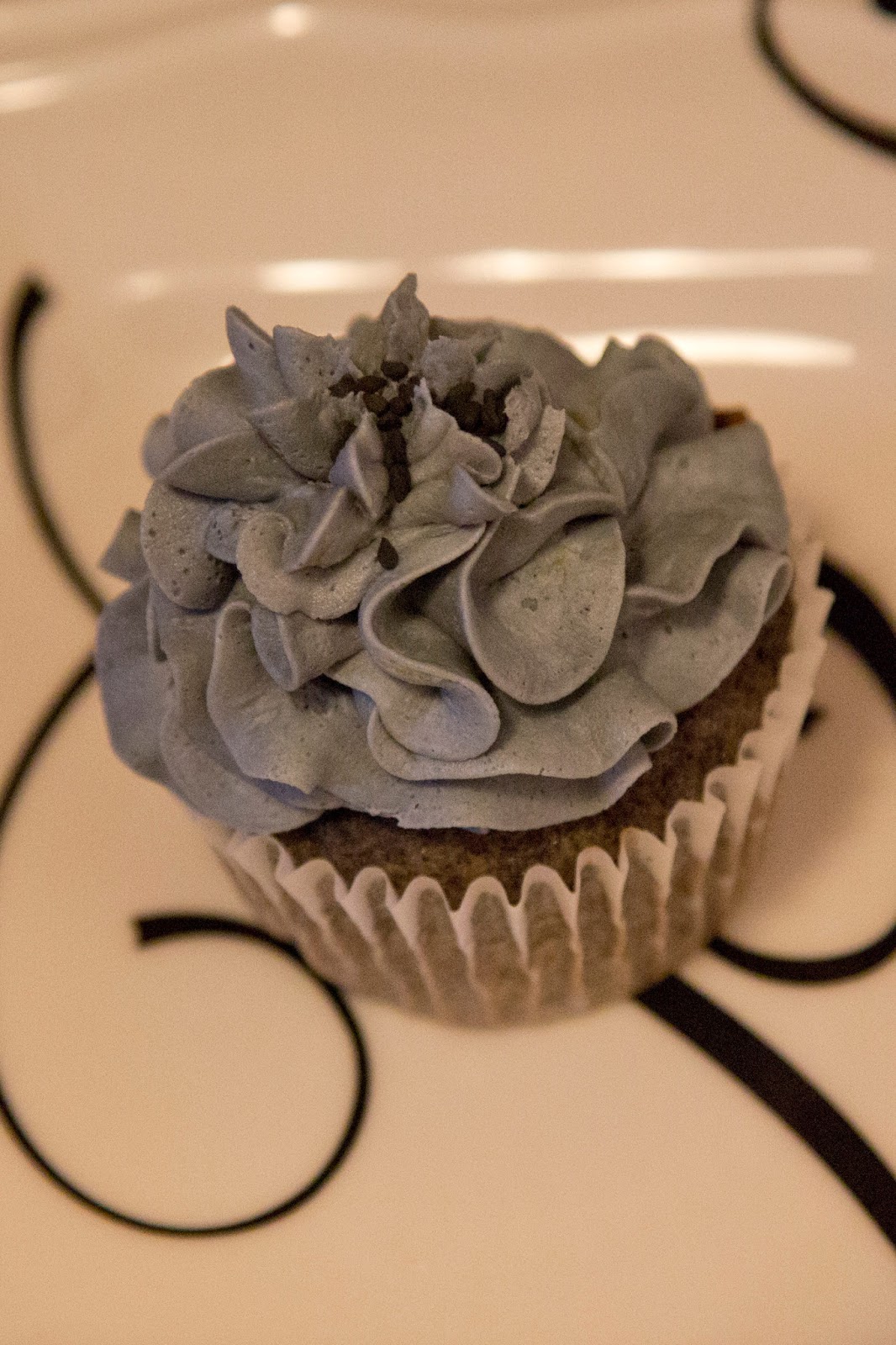
These cupcakes from Sprinkle Bakes are quite unique from my point of view. The cupcake is made with black sesame paste, which is apparently a dessert in Asian cultures. The cupcakes are a bit nutty, and the lemon filling and frosting are quite unexpected given the dreary gray of the cupcakes. Fun for this seemingly endless winter.
Stormy Today, Sunshine Tomorrow Cupcakes
Cupcakes
1/2 cup butter, softened
1 cup sugar
2 eggs
2 tsp. vanilla extract
1 3/4 cups flour
1/2 tsp. baking soda
1/2 tsp. baking powder
1/4 tsp. salt
1 cup black sesame paste (can use store bought or Sprinkle Bake's recipe)
8 oz. lemon curd
Frosting
2 sticks butter, softened
3 cups powdered sugar
1 tsp. vanilla extract
Zest of one lemon
1/4 tsp. black gel food coloring or black powdered food coloring
Garnish
2 Tbsp. black sesame seeds
Preheat oven to 350°F. Line a cupcake tin with cupcake papers.
In
the bowl of a stand mixer fitted with the paddle attachment, cream
together butter and sugar until light and fluffy. Add eggs one at a
time beating well after each addition. Add vanilla, and mix again.
Whisk
together flour, baking soda, baking powder and salt, and set aside. Add
flour mixture, and black sesame paste alternately, beginning and ending
with flour. Batter will be thick.
Fill
cupcake papers with 1/4 cup level measures of batter. Bake for 17 to 22
minutes. Cool cupcakes completely on wire rack.
Fill each cupcake with lemon curd either using a bismark tip and pastry bag or by cutting a hole into each cupcake.
To make frosting, cream
softened butter and powdered sugar together. Once the frosting is thick
and fluffy, add the vanilla and lemon zest. Beat in the food coloring
until uniformly grey. Transfer to a piping bag fitted with a large piping tip. Pipe frosting onto cooled cupcakes, and sprinkle with
black sesame seeds. Makes 15 to 20 cupcakes.
Sour Cream Coffee Cake
Our weekend will be filled with paint since we're repainting our entire house in hopes that it will finally sell. We're actually hiring my hubby's uncle to do the painting, but he's going to be there the whole time providing assistance along with his parents. I'm banished from being there for long periods of time since I'm preggo ... and I will have our active 18-month-old son in tow. I can only imagine the chaos of him surrounded by freshly painted walls and all sorts of paint.
But, he's my big helper in preparing food for the crew that will be working. We're doing shredded BBQ chicken in the slow cooker, and we made this coffee cake from Brown Eyed Baker for breakfast. It's a moist, fairly dense cake. Personally, I think coffee cake should have the crumb mixture through the entire thing. Perhaps next time.
Sour Cream Coffee Cake
But, he's my big helper in preparing food for the crew that will be working. We're doing shredded BBQ chicken in the slow cooker, and we made this coffee cake from Brown Eyed Baker for breakfast. It's a moist, fairly dense cake. Personally, I think coffee cake should have the crumb mixture through the entire thing. Perhaps next time.
Sour Cream Coffee Cake
1 1/2 sticks butter at room temperature
1 1/2 cups granulated sugar
3 eggs at room temperature
1 1/2 tsp. vanilla
1 1/4 cups sour cream
2 1/2 cups cake flour (not self-rising)
2 tsp. baking powder
1/2 tsp. baking soda
1/4 tsp. salt
Streusel
1/4 cup light brown sugar, packed
1/2 cup flour
1 1/2 tsp. ground cinnamon
1/4 tsp. salt
3 Tbsp. cold unsalted butter, cut into pieces
Glaze
1/2 cup powdered sugar
2 Tbsp. real maple syrup
1 1/2 cups granulated sugar
3 eggs at room temperature
1 1/2 tsp. vanilla
1 1/4 cups sour cream
2 1/2 cups cake flour (not self-rising)
2 tsp. baking powder
1/2 tsp. baking soda
1/4 tsp. salt
Streusel
1/4 cup light brown sugar, packed
1/2 cup flour
1 1/2 tsp. ground cinnamon
1/4 tsp. salt
3 Tbsp. cold unsalted butter, cut into pieces
Glaze
1/2 cup powdered sugar
2 Tbsp. real maple syrup
Preheat the oven to 350° F. Grease and flour a 10-inch tube or Bundt pan.
Cream the butter and sugar in the bowl of an electric mixer fitted with the paddle attachment for 4 to 5 minutes, until light. Add the eggs 1 at a time, and then add the vanilla and sour cream. In a separate bowl, sift together the flour, baking powder, baking soda, and salt. With the mixer on low, add the flour mixture to the batter until just combined. Finish stirring with a spatula to be sure the batter is completely mixed.
For the streusel, place the brown sugar, flour, cinnamon, salt, and butter in a bowl and pinch together with your fingers until it forms a crumble.
Spoon half the batter into the pan and spread it out with a knife. Sprinkle with 3/4 cup streusel. Spoon the rest of the batter in the pan, spread it out, and scatter the remaining streusel on top. Bake for 50 to 60 minutes, until a cake tester comes out clean.
Let cool on a wire rack for at least 30 minutes. Carefully transfer the cake, streusel side up, onto a serving plate. Whisk the confectioners' sugar and maple syrup together, adding a few drops of water if necessary, to make the glaze runny. Drizzle as much as you like over the cake with a fork or spoon.
Cream the butter and sugar in the bowl of an electric mixer fitted with the paddle attachment for 4 to 5 minutes, until light. Add the eggs 1 at a time, and then add the vanilla and sour cream. In a separate bowl, sift together the flour, baking powder, baking soda, and salt. With the mixer on low, add the flour mixture to the batter until just combined. Finish stirring with a spatula to be sure the batter is completely mixed.
For the streusel, place the brown sugar, flour, cinnamon, salt, and butter in a bowl and pinch together with your fingers until it forms a crumble.
Spoon half the batter into the pan and spread it out with a knife. Sprinkle with 3/4 cup streusel. Spoon the rest of the batter in the pan, spread it out, and scatter the remaining streusel on top. Bake for 50 to 60 minutes, until a cake tester comes out clean.
Let cool on a wire rack for at least 30 minutes. Carefully transfer the cake, streusel side up, onto a serving plate. Whisk the confectioners' sugar and maple syrup together, adding a few drops of water if necessary, to make the glaze runny. Drizzle as much as you like over the cake with a fork or spoon.
March 12, 2013
Cheesy Bagels
I had some delicious cheese that I wasn't eating fast enough to prevent it from molding, so I decided to modify Brown-Eyed Baker's recipe using the cheese I had on hand. Most bagels are a bit time consuming, and these required even more time than my standard version. Although good, I don't think they quite warrant the extra effort.
Cheesy Bagels
Cheesy Bagels
Sponge
1 tsp. instant yeast
4 cups unbleached high-gluten or bread flour
2½ cups water, at room temperature
Dough
½ tsp. instant yeast
3 3/4 cups unbleached high-gluten or bread flour
2 1/2 tsp. salt
2 tsp. malt powder
8 oz. cheese, shredded
To Finish
1 Tbsp. baking soda
Cornmeal or semolina flour for dusting
1 cup shredded cheese
1 tsp. instant yeast
4 cups unbleached high-gluten or bread flour
2½ cups water, at room temperature
Dough
½ tsp. instant yeast
3 3/4 cups unbleached high-gluten or bread flour
2 1/2 tsp. salt
2 tsp. malt powder
8 oz. cheese, shredded
To Finish
1 Tbsp. baking soda
Cornmeal or semolina flour for dusting
1 cup shredded cheese
To make the sponge, stir the yeast into
the flour in a 4-quart mixing bowl. Add the water, whisking or stirring
only until it forms a smooth, sticky batter (like pancake batter). Cover
the bowl with plastic wrap and leave at room temperature for
approximately 2 hours, or until the mixture becomes very foamy and
bubbly. It should swell to nearly double in size and collapse when the
bowl is tapped on the countertop.
To make the dough, in the same mixing bowl (or in the bowl of an electric mixer), add the additional yeast to the sponge and stir. Then add 3 cups of the flour and all of the salt and malt. Stir (or mix on low speed with the dough hook) until the ingredients form a ball, slowly working in the remaining ¾ cup flour to stiffen the dough.
Transfer the dough to the counter and knead for at least 10 minutes (or for 6 minutes by machine). Add the cheese during the last minute or so of kneading, and knead until evenly distributed. The dough should be firm, stiffer than French bread dough, but still pliable and smooth. There should be no raw flour - all the ingredients should be hydrated. The dough should pass the windowpane test and register 77 to 81 degrees F. If the dough seems dry and rips, add a few drops of water and continue kneading. If the dough seems sticky or tacky, add more flour to achiever the stiffness required. The kneaded dough should feel satiny and pliable but not be tacky.
Immediately divide the dough into 12 equal pieces. Form the pieces into rolls. Cover the rolls with a damp towel and allow them to rest for approximately 20 minutes.
Line 2 sheet pans with baking parchment and mist lightly with spray oil. Proceed with shaping the bagels: Push a hole through the center of the roll with your thumb and stretch out the hole to 2½ inches in diameter, making sure that the resulting ring has a fairly even thickness all the way around.
Place each of the shaped pieces 2 inches apart on the pan. Mist the bagels very lightly with the spray oil and cover loosely with plastic wrap. Let the pans sit at room temperature for 20 minutes.
Check to see if the bagels are ready to be retarded in the refrigerator by using the "float test". Fill a small bowl with cool or room temperature water. The bagels are ready to be retarded when they float within 10 seconds of being dropped into the water. Take one bagel and test it. If it floats, immediately return the tester bagel to the pan, pat it dry, cover the pan, and place it in the refrigerator overnight (it can stay in the refrigerator for up to 2 days). If the bagel does not float, return it to the pan and continue to proof the dough at room temperature, checking back every 10 to 20 minutes or so until a tester floats. The time needed to accomplish the float will vary, depending on the ambient temperature and the stiffness of the dough.
The following day (or when you are ready to bake the bagels), preheat the oven to 500°F with the two racks set in the middle of the oven. Bring a large pot of water to a boil (the wider the better), and add the baking soda. Have a slotted spoon or skimmer nearby.
Remove the bagels from the refrigerator and gently drop them into the water, boiling only as many as comfortably fit (they should float within 10 seconds). After 1 minute flip them over and boil another minute. While the bagels are boiling, sprinkle the same parchment-lined sheet pans with cornmeal or semolina flour. Sprinkle the bagels with the shredded as soon as they come out of the water.
When all the bagels have been boiled and topped, place the pans on the two middle shelves in the oven. Bake for approximately 8 minutes, then rotate the pans, switching shelves and giving the pans a 180-degree rotation. (If you are only baking one pan at a time, keep it on the center shelf but still rotate 180 degrees.) After the rotation, lower the oven temperature to 450°F and continue baking for about 8 minutes, or until the bagels turn golden brown.
Remove the pans from the oven and let the bagels cool on a rack for 15 minutes or longer before serving. Makes 12 bagels.
To make the dough, in the same mixing bowl (or in the bowl of an electric mixer), add the additional yeast to the sponge and stir. Then add 3 cups of the flour and all of the salt and malt. Stir (or mix on low speed with the dough hook) until the ingredients form a ball, slowly working in the remaining ¾ cup flour to stiffen the dough.
Transfer the dough to the counter and knead for at least 10 minutes (or for 6 minutes by machine). Add the cheese during the last minute or so of kneading, and knead until evenly distributed. The dough should be firm, stiffer than French bread dough, but still pliable and smooth. There should be no raw flour - all the ingredients should be hydrated. The dough should pass the windowpane test and register 77 to 81 degrees F. If the dough seems dry and rips, add a few drops of water and continue kneading. If the dough seems sticky or tacky, add more flour to achiever the stiffness required. The kneaded dough should feel satiny and pliable but not be tacky.
Immediately divide the dough into 12 equal pieces. Form the pieces into rolls. Cover the rolls with a damp towel and allow them to rest for approximately 20 minutes.
Line 2 sheet pans with baking parchment and mist lightly with spray oil. Proceed with shaping the bagels: Push a hole through the center of the roll with your thumb and stretch out the hole to 2½ inches in diameter, making sure that the resulting ring has a fairly even thickness all the way around.
Place each of the shaped pieces 2 inches apart on the pan. Mist the bagels very lightly with the spray oil and cover loosely with plastic wrap. Let the pans sit at room temperature for 20 minutes.
Check to see if the bagels are ready to be retarded in the refrigerator by using the "float test". Fill a small bowl with cool or room temperature water. The bagels are ready to be retarded when they float within 10 seconds of being dropped into the water. Take one bagel and test it. If it floats, immediately return the tester bagel to the pan, pat it dry, cover the pan, and place it in the refrigerator overnight (it can stay in the refrigerator for up to 2 days). If the bagel does not float, return it to the pan and continue to proof the dough at room temperature, checking back every 10 to 20 minutes or so until a tester floats. The time needed to accomplish the float will vary, depending on the ambient temperature and the stiffness of the dough.
The following day (or when you are ready to bake the bagels), preheat the oven to 500°F with the two racks set in the middle of the oven. Bring a large pot of water to a boil (the wider the better), and add the baking soda. Have a slotted spoon or skimmer nearby.
Remove the bagels from the refrigerator and gently drop them into the water, boiling only as many as comfortably fit (they should float within 10 seconds). After 1 minute flip them over and boil another minute. While the bagels are boiling, sprinkle the same parchment-lined sheet pans with cornmeal or semolina flour. Sprinkle the bagels with the shredded as soon as they come out of the water.
When all the bagels have been boiled and topped, place the pans on the two middle shelves in the oven. Bake for approximately 8 minutes, then rotate the pans, switching shelves and giving the pans a 180-degree rotation. (If you are only baking one pan at a time, keep it on the center shelf but still rotate 180 degrees.) After the rotation, lower the oven temperature to 450°F and continue baking for about 8 minutes, or until the bagels turn golden brown.
Remove the pans from the oven and let the bagels cool on a rack for 15 minutes or longer before serving. Makes 12 bagels.
Subscribe to:
Posts (Atom)